Pretty! Juwiring Painted Umbrella
Who agrees that painted umbrellas are the ultimate craft art during the rainy season? Although thousands of years ago umbrellas only functioned as protection from the sun's heat, in its development umbrellas were also used to hold rainwater. Still, at the beginning of its invention, the umbrella was once a symbol of position that not everyone could wear, even in the history of the western, the umbrella reflected one's social status.
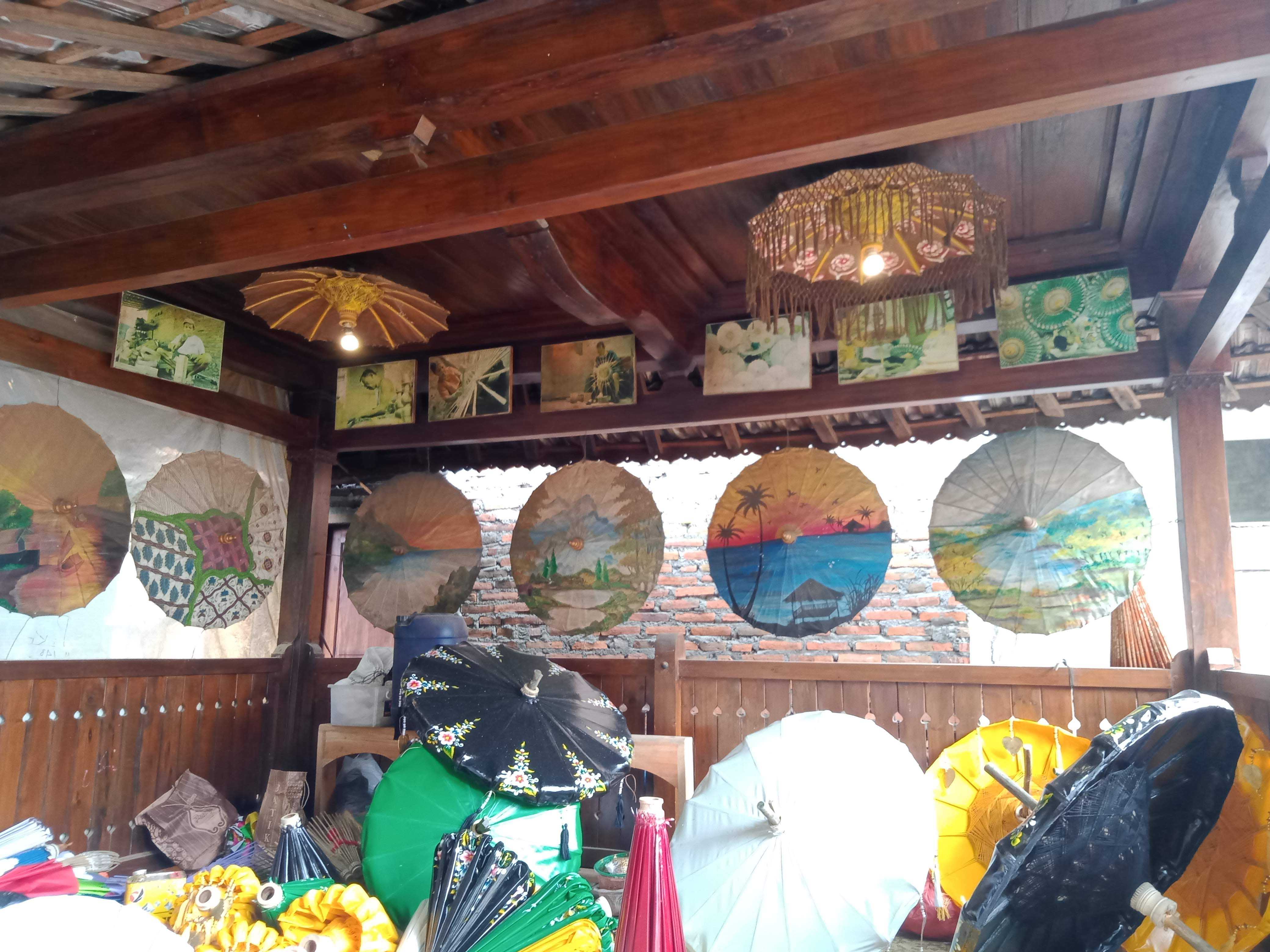
Still talking about umbrellas, Juwiring which is one of the sub-districts in Klaten Regency is famous for painted umbrella crafts. This potential in the tourism sector also raises the image of Juwiring as a tourism village that is trying to revive the existence of the art of painted umbrella art which has been occupied by the community for generations but stopped when the monetary crisis hit Indonesia in 1998. Three villages that were productive in producing painted umbrellas were Tanjung, Kenaiban, and Kwarasan.
Not as lively as a few years ago, now there are only a few craftsmen who are divided into ornamental umbrella craftsmen and corpse umbrella craftsmen. One of the craftsmen who still exist and survive until now is Ngadi as the owner of the painted umbrella craft Ngudi Rahayu in Gumantar hamlet, Tanjung, Juwiring. He has been in the painted umbrella craft for more than two decades by mobilizing more than 30 locals but it has also stalled due to the COVID-19 pandemic until it ends in the reduction of craftsmen.
As an educational tour for students, Ngudi Rahayu's painted umbrella craft provides an opportunity for all visitors who want to buy or just learn to see the handicrafts making process that starts to be eroded by this time. Here are the steps in finishing the painted umbrella.
Umbrella Framework Process
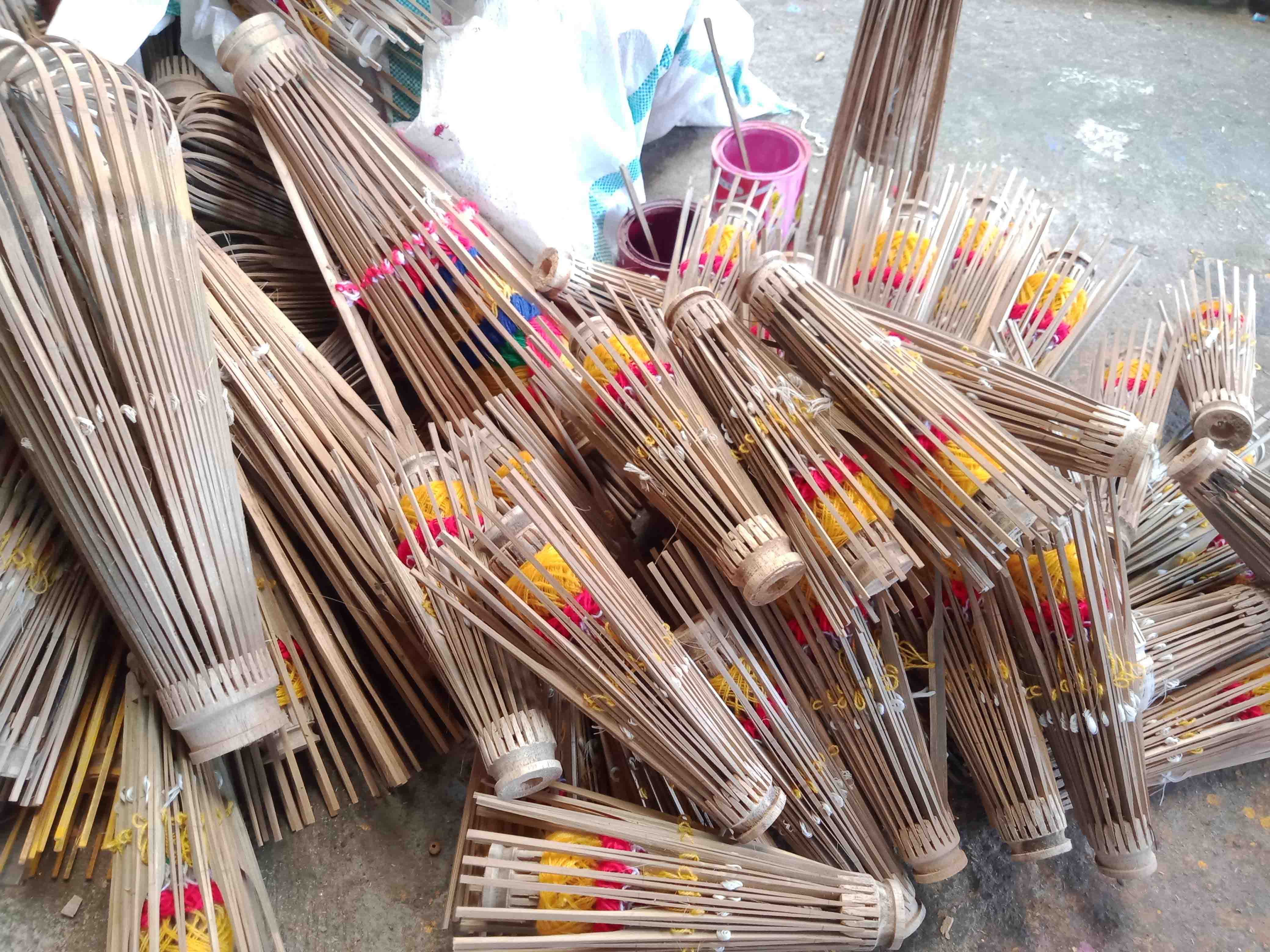
This process begins with the manufacture of the bungkul (head); which is part of the umbrella frame that is used to combine sanggan (support) and sodo (wooden bars resembling small bars, some Javanese call them ruji) so that the umbrella opens perfectly. The tools used to make the bungkul, namely, a lathe, saw, and uncek (taper iron for punching holes in bungkul). Followed by the process of making stalks and finally the installation of umbrellas, starting with the assembly of bungkul, sodo, sanggan which are assembled using lawe thread and nylon thread to form a single unit.
Umbrella Fabric Installation
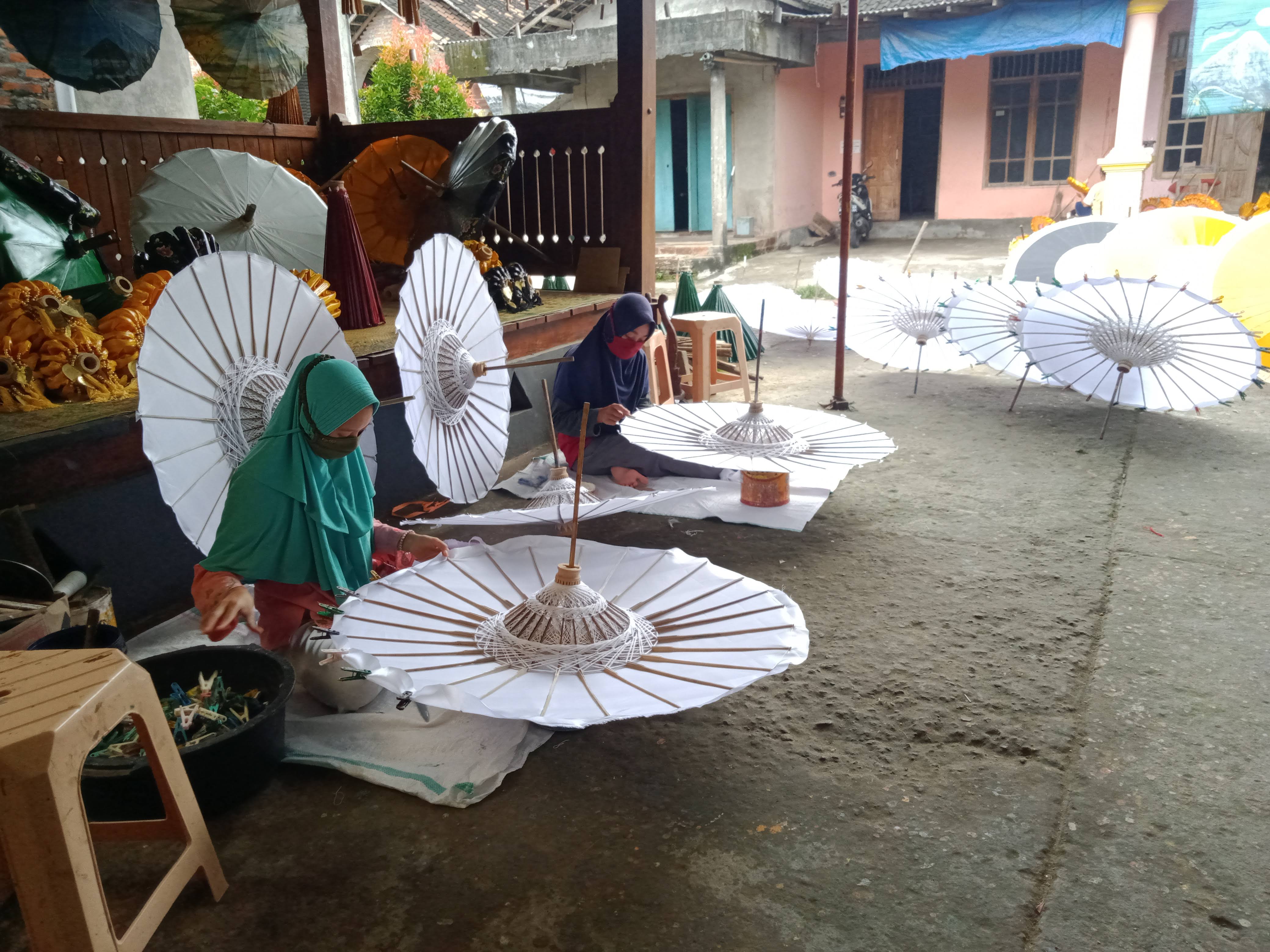
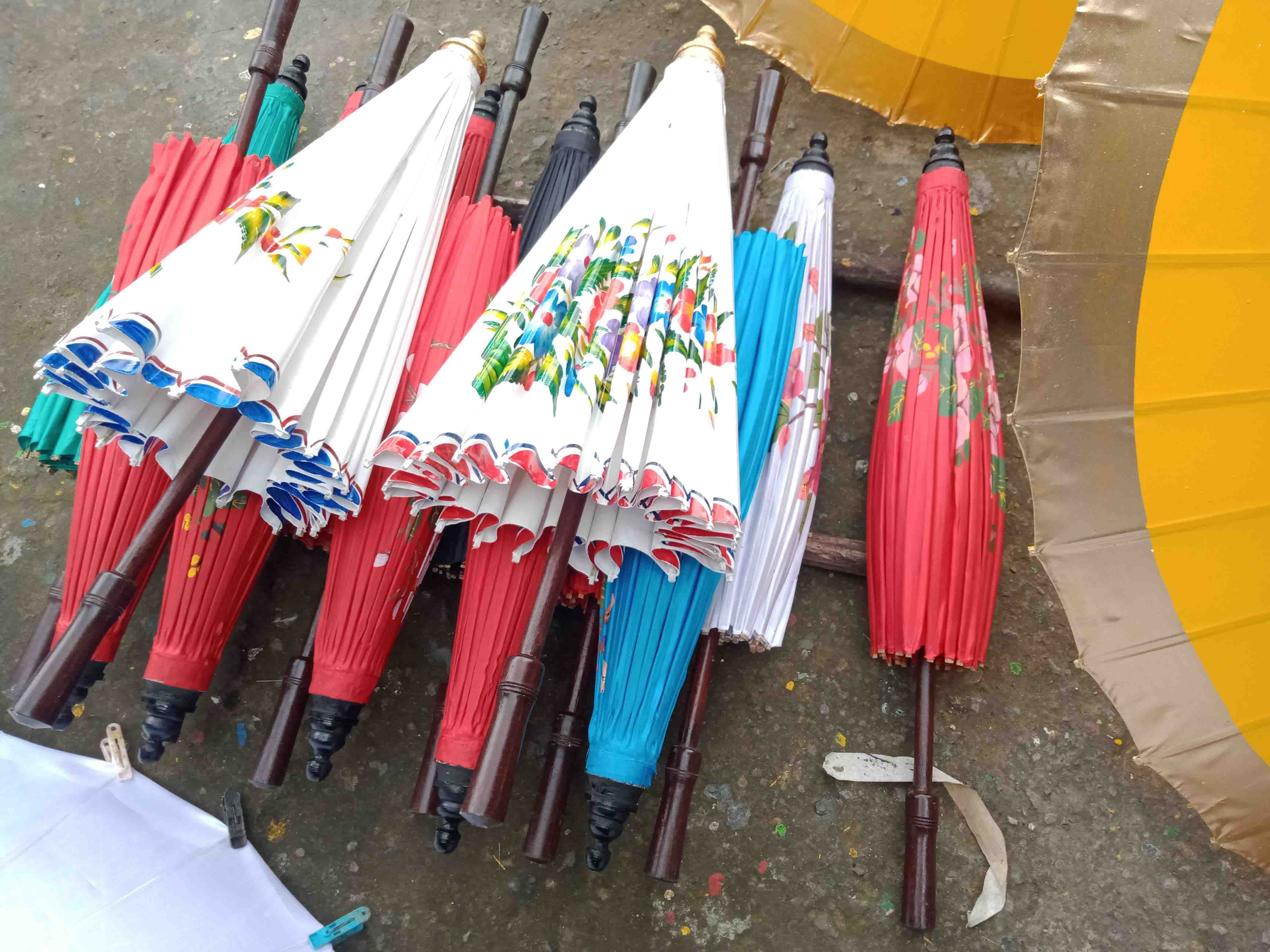
After all the frameworks are installed, the next stage is mayu, in Javanese mayoni means providing a roof as a shade, this term is almost the same as installing tiles in the process of making a house. Mayu in painted umbrella crafts is the stage of attaching a cloth to the umbrella frame. The cloth is firstly cut in circles according to the diameter of the umbrella plus a little to smooth the cloth. The next stage is plipit, which is the rest at the end of the cloth folded in to make it look neat (tidying the cloth). For certain types of fabrics or materials, there is a drying process so that they are glued and dry perfectly. After this stage is complete, it can be continued in the finishing process, enhancing by being decorated or painted using paint.
As ordinary people who promote a practical and simple lifestyle, have we ever asked, what is the function of these eye-catching and pretty umbrellas? Many! Apart from their main function as protection from heat and rain, these painted umbrellas which are classified as decorative umbrellas can be used as decorations (restaurants, tourist attractions, hotels, and offices), traditional ceremony equipment, dance equipment, souvenirs, and as room decorations.
One-stacking umbrella is usually used for traditional ceremonies of wedding, temu manten, and circumcision, then two-stacking umbrella is used for decoration on either side of certain events such as a wedding. Stacking 5 is used for ancient state administration (symbolizing Pancasila) and nine-stacking umbrellas for the Palace during certain ceremonies.
Whatever the underlying motive, as decorative or functional for umbrellas (protecting the heat and rain), Juwiring widely opens the door for being known. Still similar, but there are some distinguishing characteristics with certain regions. Generally (if not made according to the customer's request) the difference lies in the shape of the frame. The end of the Tasikmalaya umbrella frame has a straight end, Bali has a curved end and Klaten has a half-curved end. Happy vacation on the land of Roro Jonggrang while using an umbrella! (Wiwin/ Contributor)